Card XI, Major ArcanaJustice tarot card meaning
Upright and reversedJustice in shortIn short
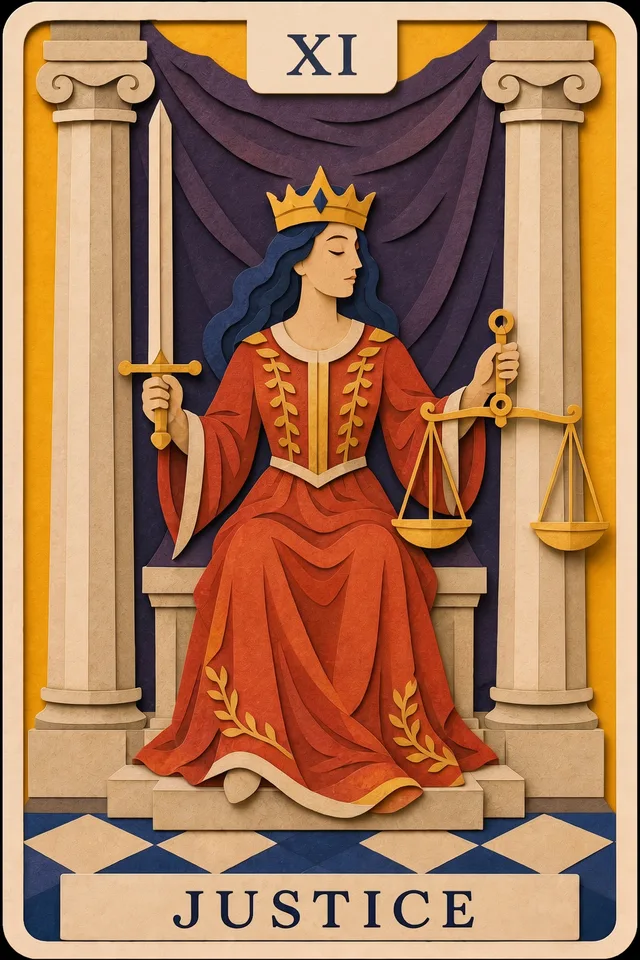
Justice is a fair hearing. A crowned woman sits between two pillars, sword raised in one hand, scales in the other. Be honest, weigh it fairly, and own what you did.
- Fairness
- Truth
- Consequences
Piece oneThe pillars
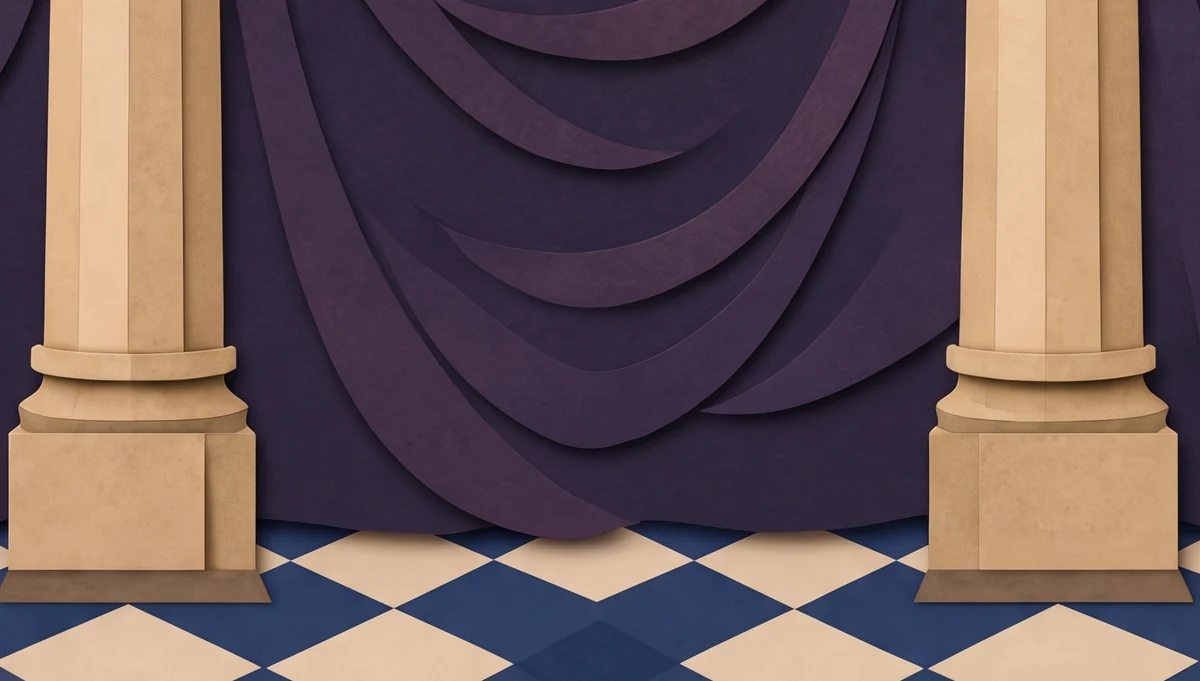
She sits between two stone pillars, like The High Priestess. Waite draws the line between them: Justice keeps the moral law of this world, the High Priestess guards a spiritual one.
"the pillars of Justice open into one world and the pillars of the High Priestess into another."Waite, 1911
Why it is hereThe pillars frame her as a judge on her seat, fixed and in public view. A purple curtain hangs between them, so you can't see past the court. The sword and the scales need that stillness: a ruling from a throne that doesn't move, by a figure who leans neither way.
Piece twoThe crowned figure
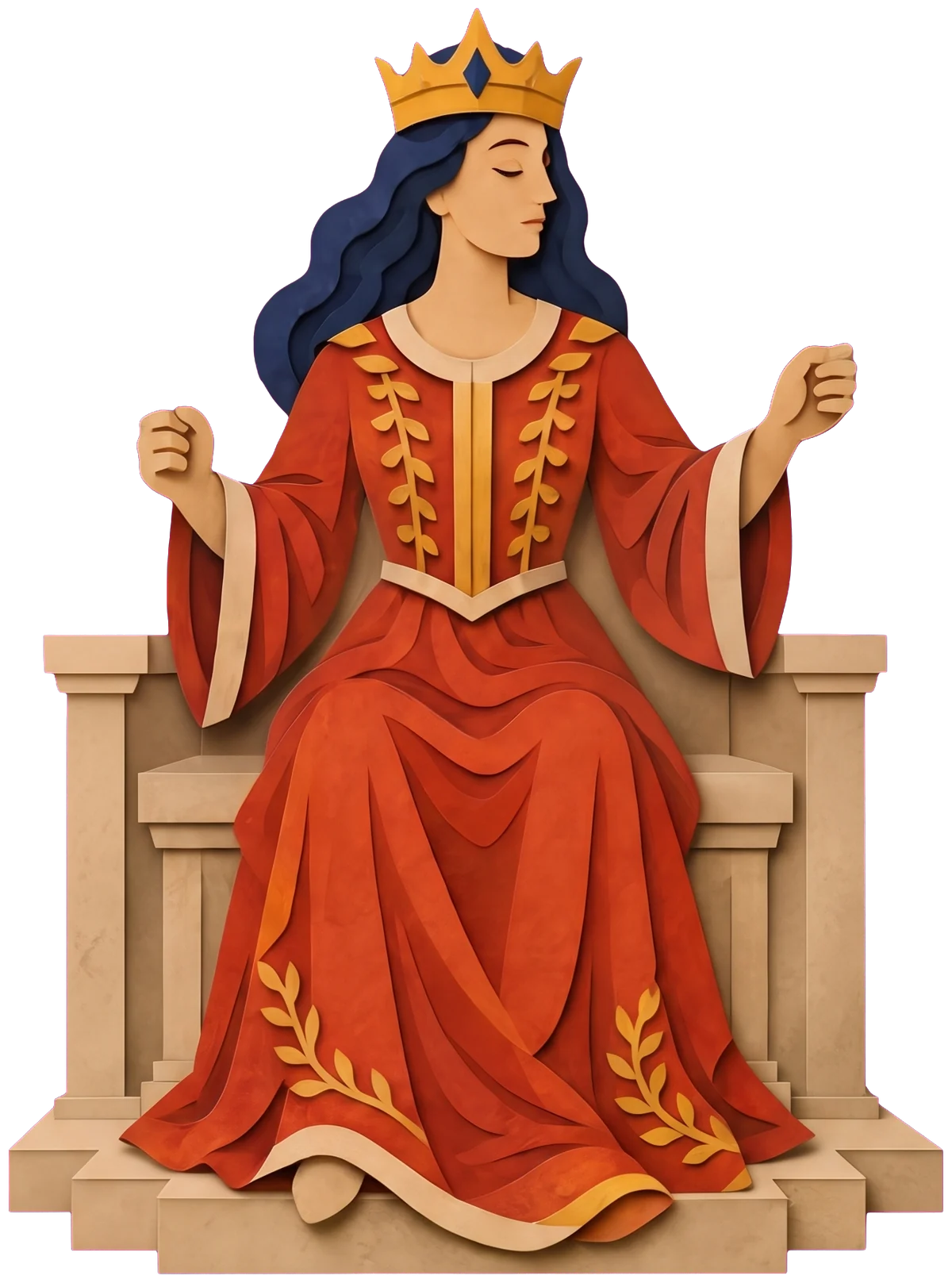
Gold crown, eyes closed, face calm. Waite says she's often called Astraea, the goddess of this virtue, then adds that the Tarot doesn't come from Roman or Greek myth.
"The female figure of the eleventh card is said to be Astræa"Waite, 1911
Why it is hereHer eyes are closed so nothing she sees can tip the scales. The calm face keeps feeling out of the verdict. The crown says the law above her is bigger than the woman who carries it. She serves it with both hands, the sword in one and the scales in the other.
Piece threeThe sword
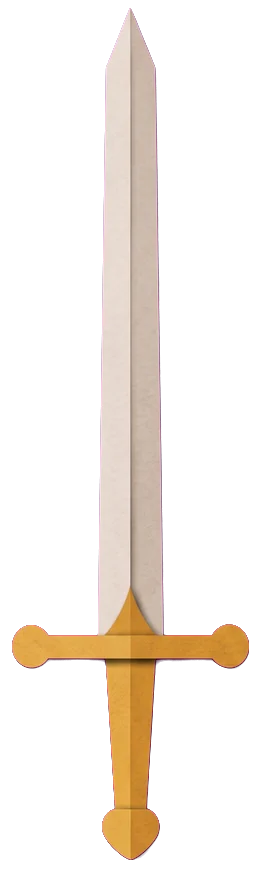
Her right hand holds a sword straight up. Waite says little here: the card keeps the old symbols and its meaning is plain. The scales weigh, then the sword cuts.
"this card follows the traditional symbolism and carries above all its obvious meanings"Waite, 1911
Why it is hereThe sword finishes what the scales begin. Weighing alone changes nothing, and the blade turns a judgment into a result. She holds it upright, point to the sky, ready and unused. The crown above it and the pillars beside it repeat the same straight vertical line.
Piece fourThe scales
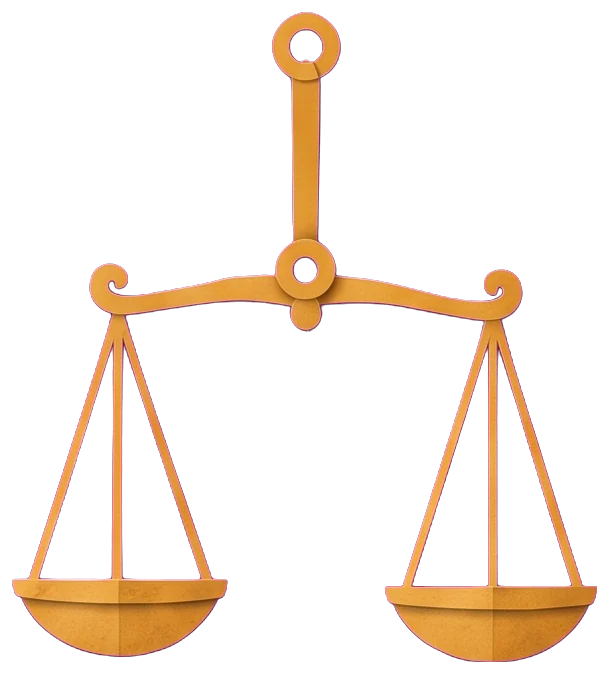
Gold scales hang from her left hand, pans level. Waite calls it the moral law that pays each person for their works. You get back what you put on the scale.
"the moral principle which deals unto every man according to his works"Waite, 1911
Why it is hereThe scales do the thinking before the sword moves. Their pans hang level, so the case is still open. She holds them in her left hand and the sword in her right: weighing and acting, kept in balance. Her closed eyes keep her from favouring either pan.
Colour, and where else it appearsEchoes
-
The pillars
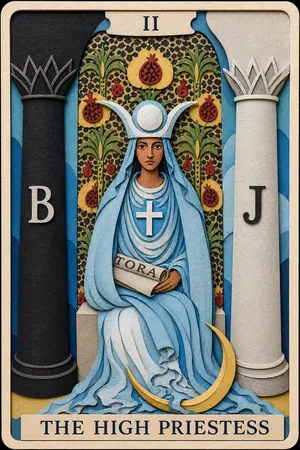
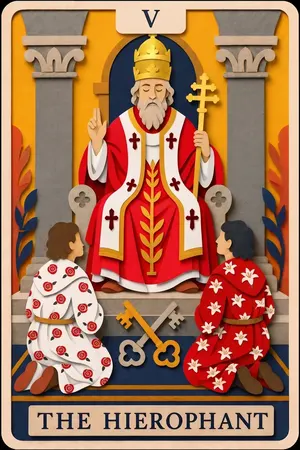
Pale stone against a deep red robe keeps all the action inside the frame. The High Priestess also sits between two pillars, one black and one white, with a veil of pomegranates behind her. The Hierophant has a grey pair. Justice's pillars match each other, both pale, so neither side starts out heavier.
-
The crowned figure
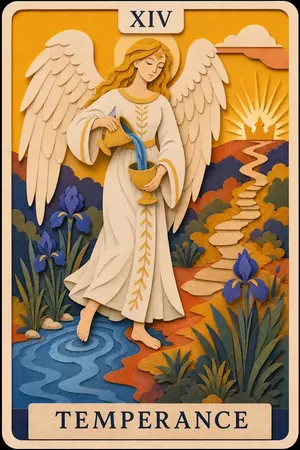
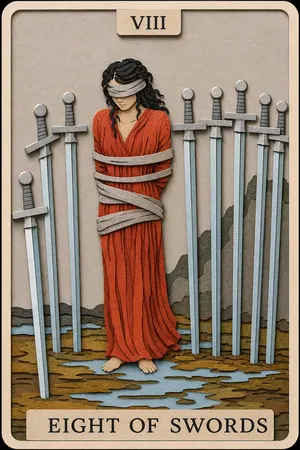
Gold crown, dark blue hair, red robe. The blue is the one cool colour on her, and it sits right beside the closed eyes. The angel of Temperance pours between two vessels with eyes closed too. The woman in the Eight of Swords wears a blindfold and can't see at all. Justice closes her own eyes by choice.
Also in -
The sword
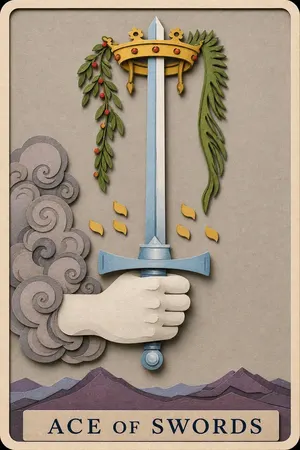
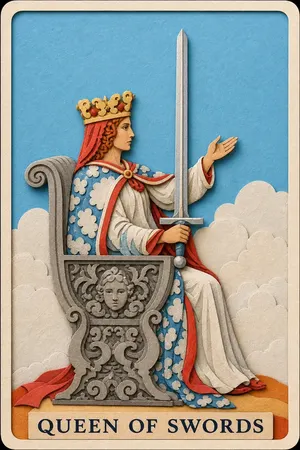
A pale blade against the purple curtain, the cleanest straight line on the card. The Ace of Swords rises from a cloud with a crown around its tip, a sword before anyone has taken it up. The Queen of Swords holds hers upright like Justice, but her free hand opens toward you instead of carrying scales.
Also in -
The scales
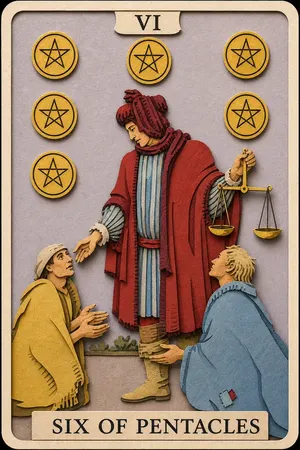
Bright gold against the pale pillar and the purple curtain, so your eye lands on the weighing first. The same scales come back in the Six of Pentacles, held by a man in red while two beggars kneel at his feet. There they measure what he gives away. On Justice they measure what each person has done.
Also in
Colour notes are ours, read from the picture; Waite does not explain the colours.
JusticeUpright
A fair result. Waite lists equity, rightness, probity, executive, and the deserving side winning in law. The truth comes out and things get weighed as they are.
Cause and effect, too. Your actions come back to you now. Be honest, with yourself first, and the decision will be fair.
JusticeReversed
The scales tip. Waite's words: law in all its departments, legal complications, bigotry, bias, excessive severity. A judgement comes out unfair, too harsh, or stuck in paperwork.
Or you're the one bending the truth, or judging someone too hard. Check your own bias first.
Yes or noIf it is fair.
If it's fair. You get what you've earned. Acted honestly? It leans yes. If not, expect the consequences.
Justice in your lifeIn your life
Love
Honesty and balance. You get back what you both put in. Have the clear, fair talk.
Work
Contracts, agreements, fair calls. Your effort gets weighed and paid. Read before you sign.
Money
Settle up and keep records. A legal or money matter should go the fair way.
Health
Balance rest and work, food and movement. A card can't diagnose you; if something's wrong, see a doctor.
Spirituality
Look honestly at your choices and what they caused. Live by what you believe.
Advice
Tell the truth and own your part. Weigh both sides first.
As a person
Fair, honest, clear-headed. Keeps their word and expects you to keep yours. Can be strict.
Past, present, future
Past: a decision you're still living with. Present: set things right. Future: a fair outcome.
Written by us, from Waite's meanings and the picture.
Symbols and correspondencesAt a glance
- Number
- XI
- Hebrew letter
- Lamed
- Astrology
- Libra
- Element
- Air
- Upright
- Equity
- Reversed
- Law
QuestionsCommon questions
It's a fair card. Good news if you've acted well, consequences if not. Either way, the truth.
Honesty and balance. Equal give and take, or a fair talk.
If it's fair. It depends on what you put in.
Waite calls it the moral law that pays each person for their works. The scales weigh it, the sword carries it out.
Libra, an air sign, in the Golden Dawn system. Its Hebrew letter is Lamed.
Waite's Justice is the moral law that pays each person for their works. Its pillars open into a different world from the High Priestess's.
The Pictorial Key to the Tarot, 1911Card meanings and quotes: A. E. Waite, The Pictorial Key to the Tarot, 1911. Hebrew letter, sign and element: the Golden Dawn's Book T. Colours, life situations, yes or no and questions: written by us, from Waite's meanings and the picture.
All 22 major cards