X, Suit of WandsTen of Wands tarot card meaning
Upright and reversedTen of Wands in shortIn short
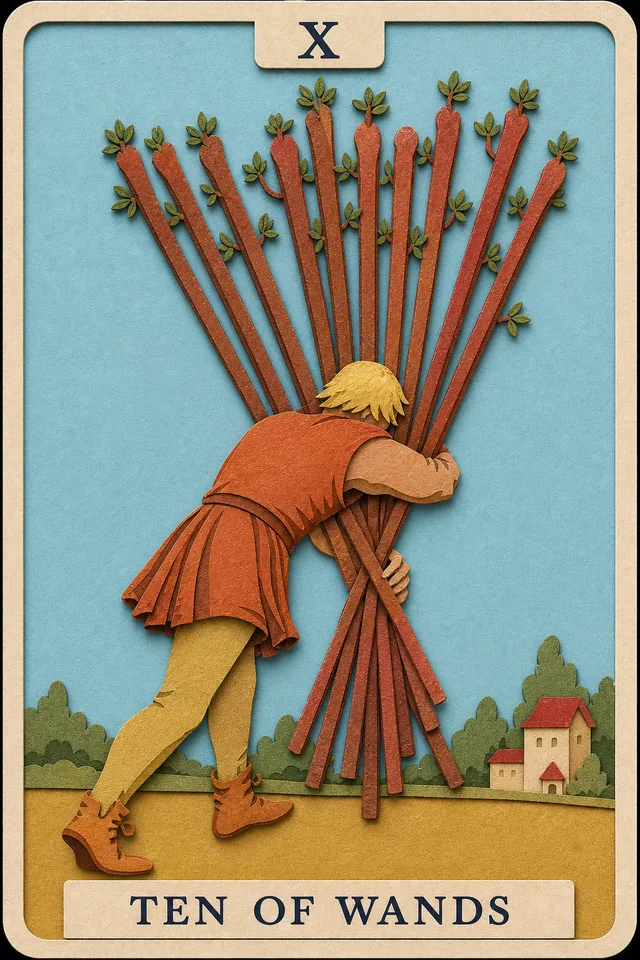
The Ten of Wands is carrying too much. A man bends under ten heavy staves, his face hidden, walking toward a house in the distance. He will likely get there. The load is more than one person should carry.
- Burden
- Responsibility
- Overload
Piece oneThe walk
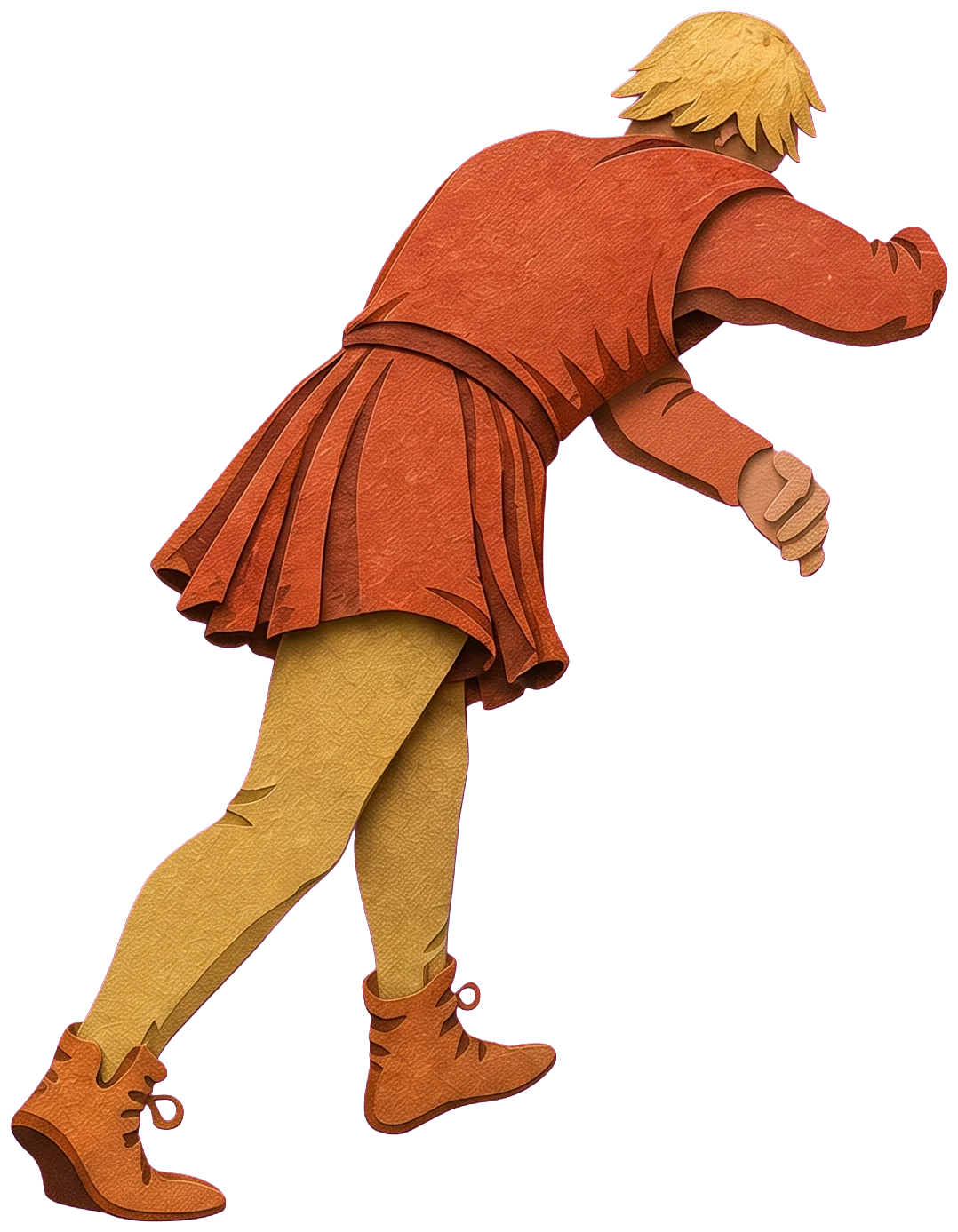
His legs keep moving, one long step after another, leaning forward to balance the weight. He hasn't stopped. A heavy card, and a card of someone who keeps going.
Why it is hereThe walk shows he hasn't given up. Bent under the bundle, he keeps stepping toward the house. The road turns the burden into a journey with an end in sight. His legs carry what his arms and bowed head can't manage alone, one long step at a time.
Piece twoThe house
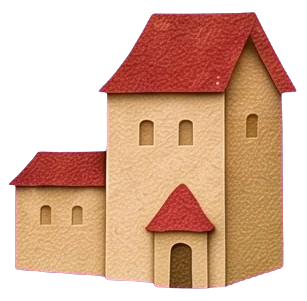
A small red-roofed house stands in the distance. He is heading there. Waite warns the place may suffer from the rods he brings. Carry it home, and home carries it too.
"The place which the figure is approaching may suffer from the rods that he carries."Waite, 1911
Why it is hereThe house is the end of the road and the reason he keeps walking. It sits small among the trees, close enough to reach. Waite warns that the place may suffer from what he carries, so home will share the weight of the ten staves. His bowed head can't see it yet.
Piece threeThe bowed head
His head is pressed into the bundle, arms wrapped round it, and he can't see the road ahead. Waite says the weight can be success itself: fortune and gain turned into a burden.
"The chief meaning is oppression simply, but it is also fortune, gain, any kind of success, and then it is the oppression of these things."Waite, 1911
Why it is hereHis head is pushed into the bundle, so he can't see where he's going. The load has taken his view as well as his back. This is Waite's point about success turned into oppression: he holds everything he gained so tightly that nothing else fits. The house waits out of his sight.
Piece fourThe ten staves
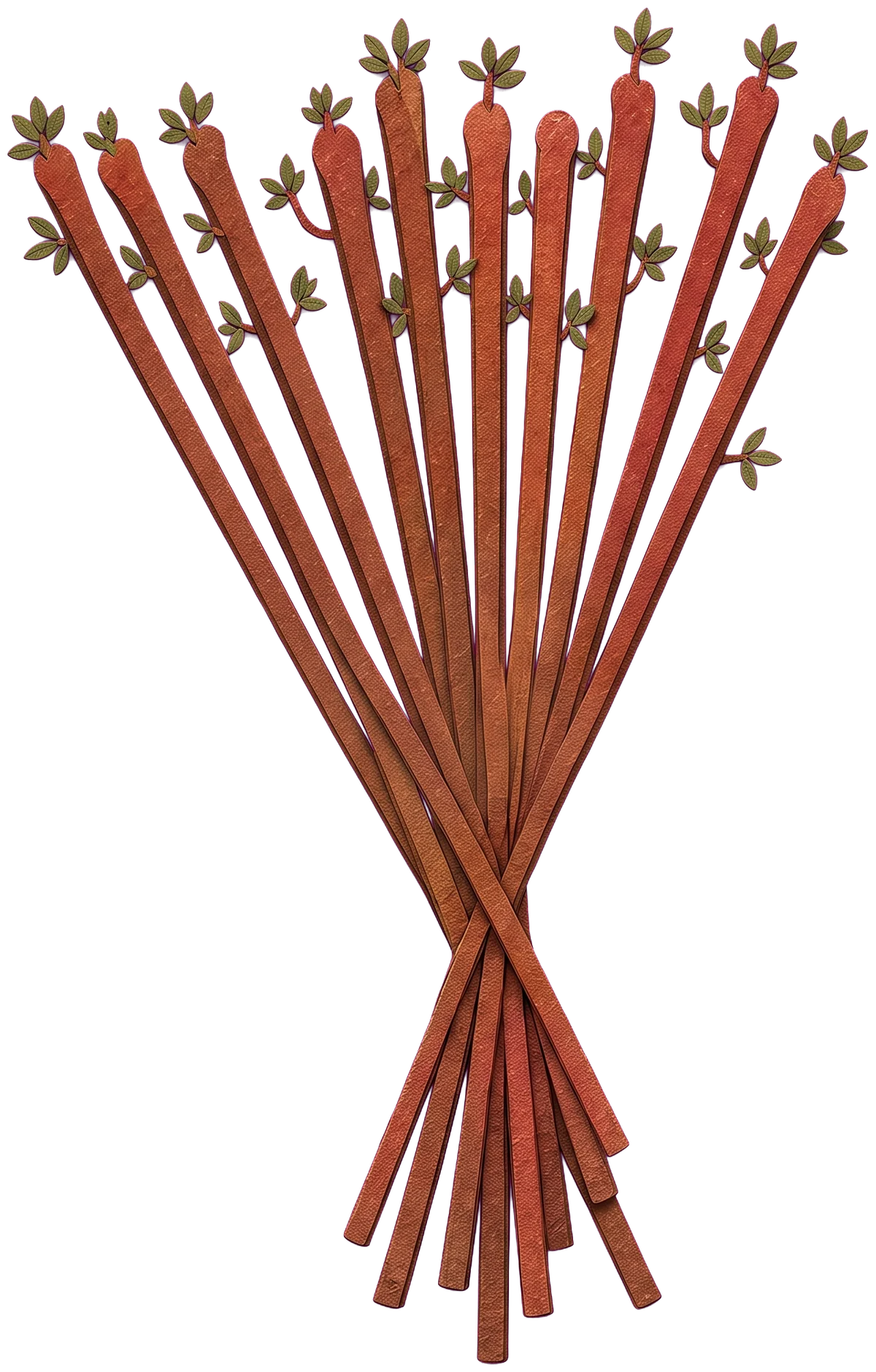
Ten staves fan out above him, gathered into one bundle. Waite says their weight oppresses him. Each staff is a success or a task he took on. Together they are too much.
"A man oppressed by the weight of the ten staves which he is carrying."Waite, 1911
Why it is hereThe bundle is every success and task gathered into one. Ten is the end of the count, so there's nothing left to add. The staves fan out above his head and crowd the sky, too many to carry well. They explain the bowed head and the slow walk toward the house.
Colour, and where else it appearsEchoes
-
The walk
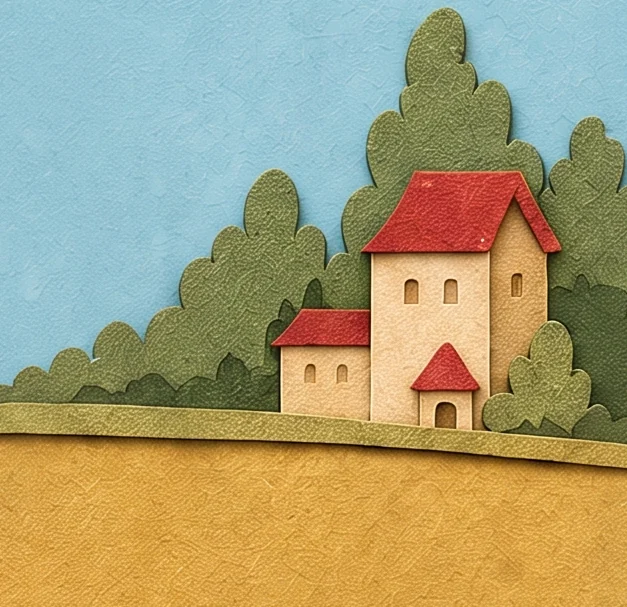
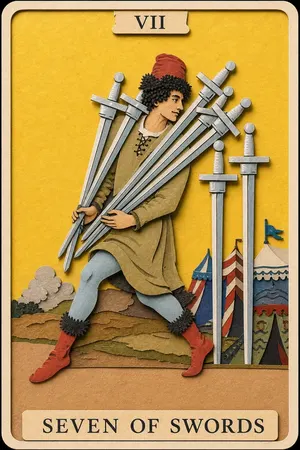
Orange and mustard, the colours of the road under his feet. The ground is flat and warm, an easy road made hard by the load. The Seven of Swords shows another man walking off with an armful of blades, slipping away from a camp. He moves lightly with his bundle; this one leans into every step.
Also in -
The house
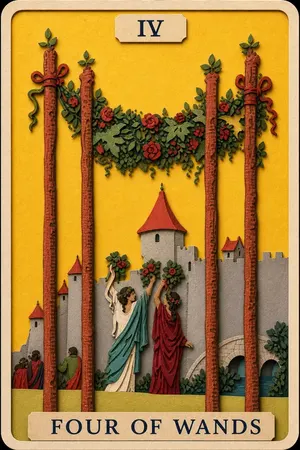
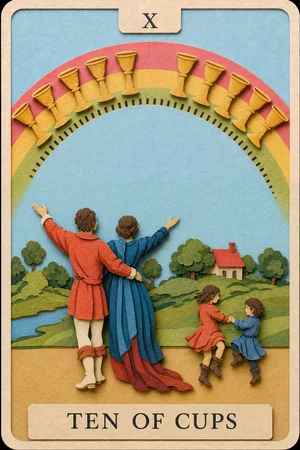
A red roof in dark green trees: small, close, safe once he reaches it. The Four of Wands shows a manor with red roofs behind a party, the homecoming already under way. In the Ten of Cups a red-roofed house sits beyond a dancing family, under a rainbow. The Ten of Wands keeps the house far off and the road long.
Also in -
The bowed head
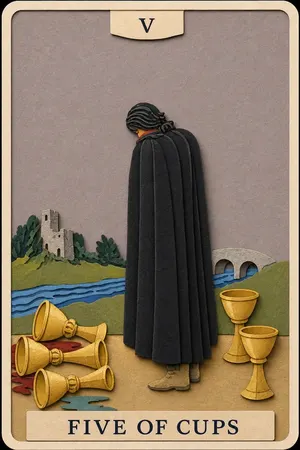
Orange tunic and fair hair half buried in red wood: he almost vanishes into the load. The Five of Cups bows its head too, a cloaked figure staring down at spilled cups. There the weight is grief and the figure stands still. Here it's work, and he's still moving.
Also in -
The ten staves
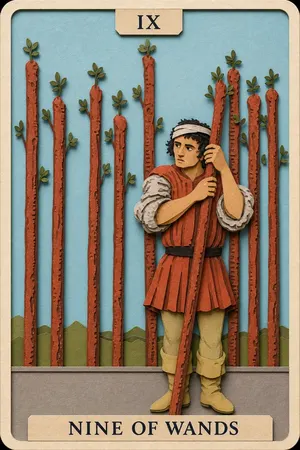
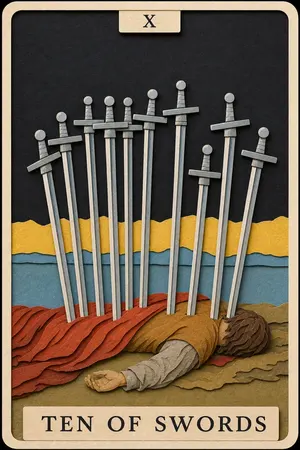
Rust red staves crowd the sky until the blue barely fits. In the Nine of Wands eight staves stood in a neat row and the ninth stayed in a man's hands. Here all ten are hugged into one bundle. The Ten of Swords also gathers ten in one place, blades driven into a fallen man. The Wands version still walks.
Also in
Colour notes are ours, read from the picture; Waite does not explain the colours.
Ten of WandsUpright
A heavy load. Waite names oppression first, then fortune, gain and any kind of success, and then the oppression of these things. You said yes to too much, or success brought more work than you can handle.
Waite also calls it a card of false-seeming, disguise and perfidy. Look at what you carry and why. Share some of it, hand some on, put some down.
Ten of WandsReversed
Waite's words: contrarieties, difficulties, intrigues. Things work against you, or people work behind your back.
You finally put the load down, or you risk collapsing because you didn't. Let go of what isn't yours to carry.
Yes or noYes, at a cost.
Yes, at a cost. You can get there. It will be heavy, and you may need to put something down.
Ten of Wands in your lifeIn your life
Love
One of you carries too much. Share the weight, or talk about why it's uneven.
Work
Overload and long hours. Delegate, say no, finish one thing before the next.
Money
Pressure and debts that pile up. Make a plan and drop what you can.
Health
Stress and strain from carrying too much. A card can't diagnose you; if something's wrong, see a doctor, and lighten the load.
Spirituality
Duty has crowded out your inner life. Keep a small daily space that asks nothing of you.
Advice
Put something down. You don't have to carry it all alone.
As a person
Hard-working, dependable. Takes on too much and finds it hard to ask for help.
Past, present, future
Past: heavy responsibility. Present: too much load. Future: the end of the road, if you share the weight.
Written by us, from Waite's meanings and the picture.
Symbols and correspondencesAt a glance
- Suit
- Wands
- Element
- Fire
- Astrology
- Saturn in Sagittarius
- Sephira
- Malkuth
- Upright
- Oppression
- Reversed
- Difficulties
QuestionsCommon questions
It's a hard card. The burden often comes from success. Lighten the load before it breaks you.
One person carries too much, or love has turned into duty. Share the weight.
Yes, at a cost. You can do it. It will be heavy.
Toward a small house in the distance. Waite warns the place may suffer from the rods he carries.
Saturn in Sagittarius, a fire sign, in the Golden Dawn system. Sephira Malkuth.
Waite shows a man pressed down by ten staves. The chief meaning is oppression, sometimes the weight of success itself, fortune and gain turned into a burden.
The Pictorial Key to the Tarot, 1911Card meanings and quotes: A. E. Waite, The Pictorial Key to the Tarot, 1911. Element, decan and sephira: the Golden Dawn's Book T. Colours, life situations, yes or no and questions: written by us, from Waite's meanings and the picture.
All 14 Wands