Card XIX, Major ArcanaThe Sun tarot card meaning
Upright and reversedThe Sun in shortIn short
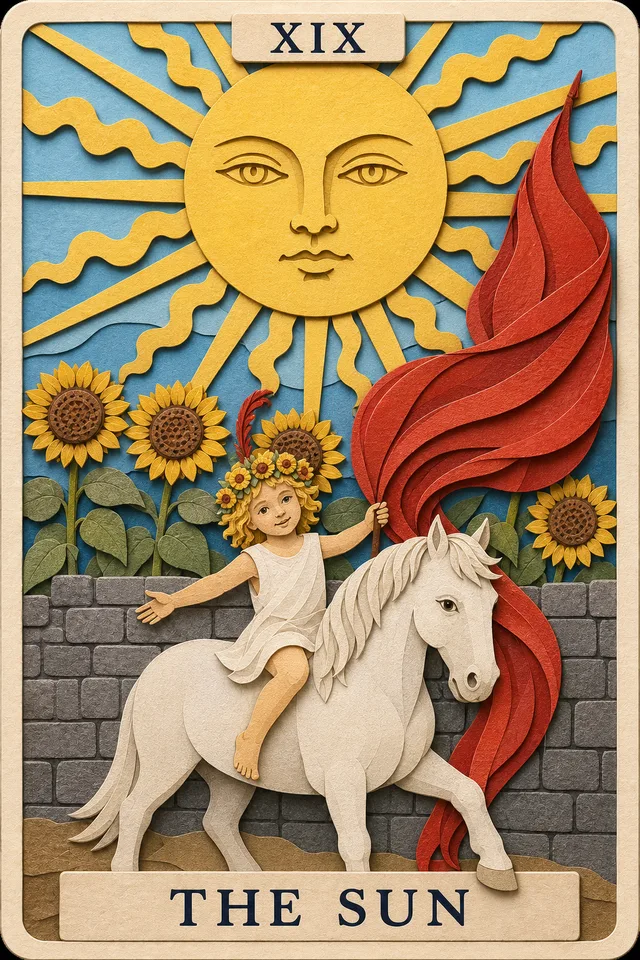
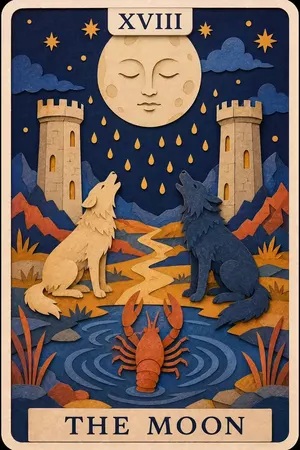
The Sun is open joy. A child rides a white horse past a wall under a huge sun, waving a red banner. After The Moon's night you can see again, and where you're going feels good.
- Joy
- Success
- Warmth
Piece oneThe sun
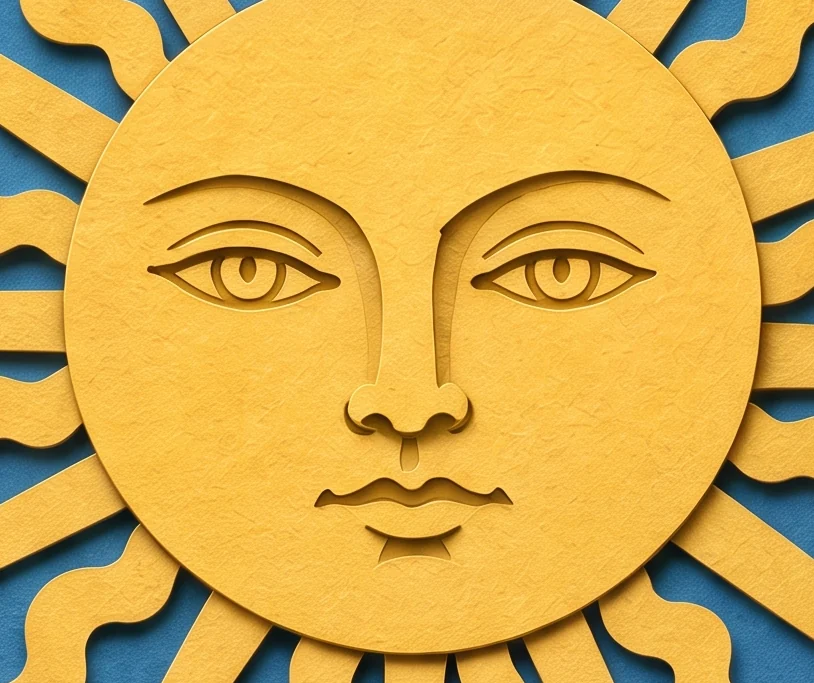
A huge gold sun with a human face fills the sky. Its rays alternate, straight then wavy, as in the older cards Waite describes. The Moon only reflects light. This is the source.
"The luminary is distinguished in older cards by chief rays that are waved and salient alternately"Waite, 1911
Why it is hereThe sun is the source of everything on this card. Its light opens the sunflowers and draws the child out into the open. Its calm human face watches over the rider below. After the borrowed light of The Moon, this is light at full strength.
Piece twoThe sunflowers
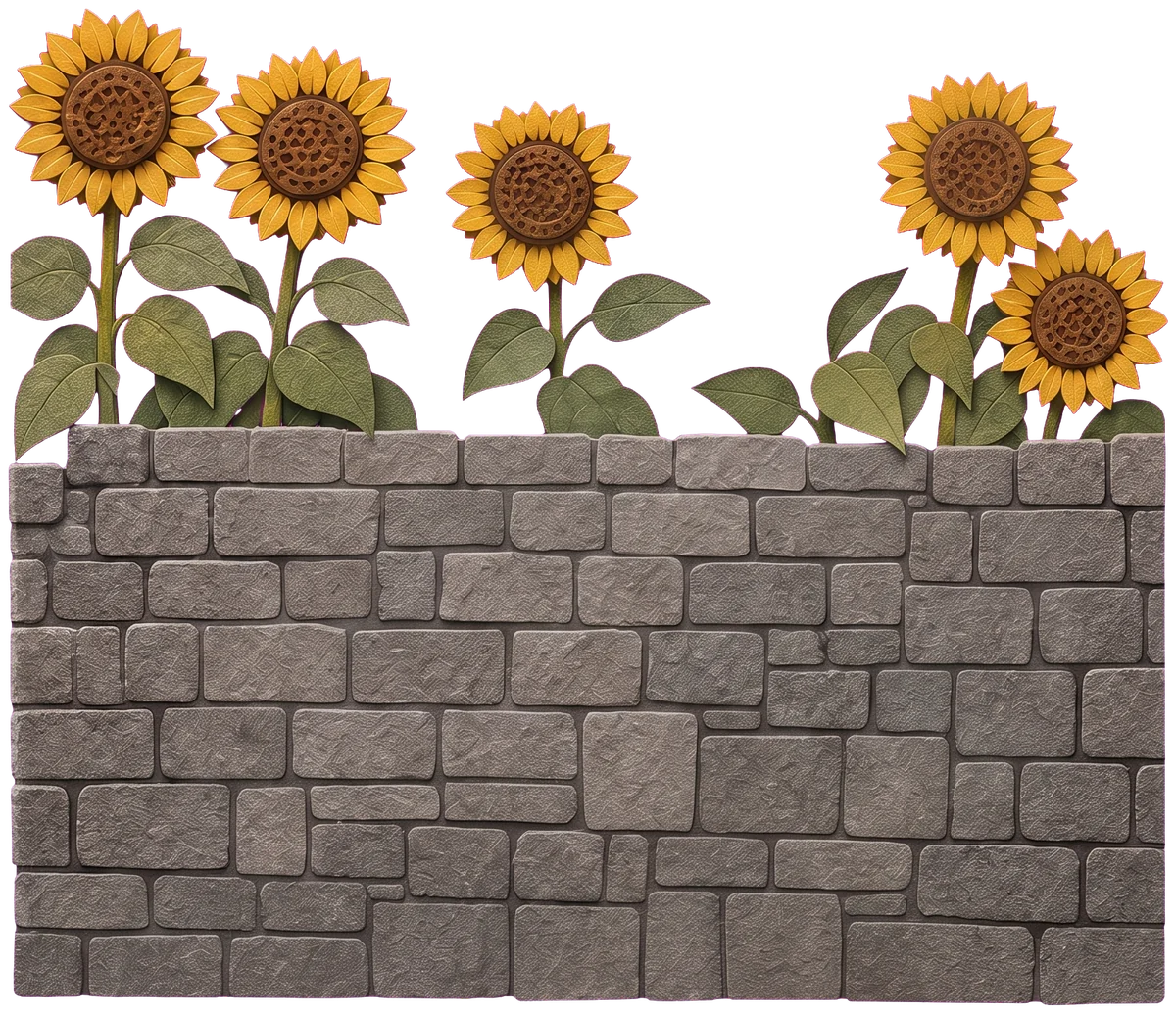
A grey stone wall runs behind the child, and tall sunflowers open their round faces above it. Waite reads the wall as the walled garden of the senses. The child rides out of it, on the journey home.
"...coming out from the walled garden of the sensitive life and passing on the journey home."Waite, 1911
Why it is hereThe sunflowers turn toward the sun, and the wall holds them in. Together they make the garden the child rides out of. The flowers bring the sun's colour down to ground level. The banner and the child move past them into the open.
Piece threeThe child
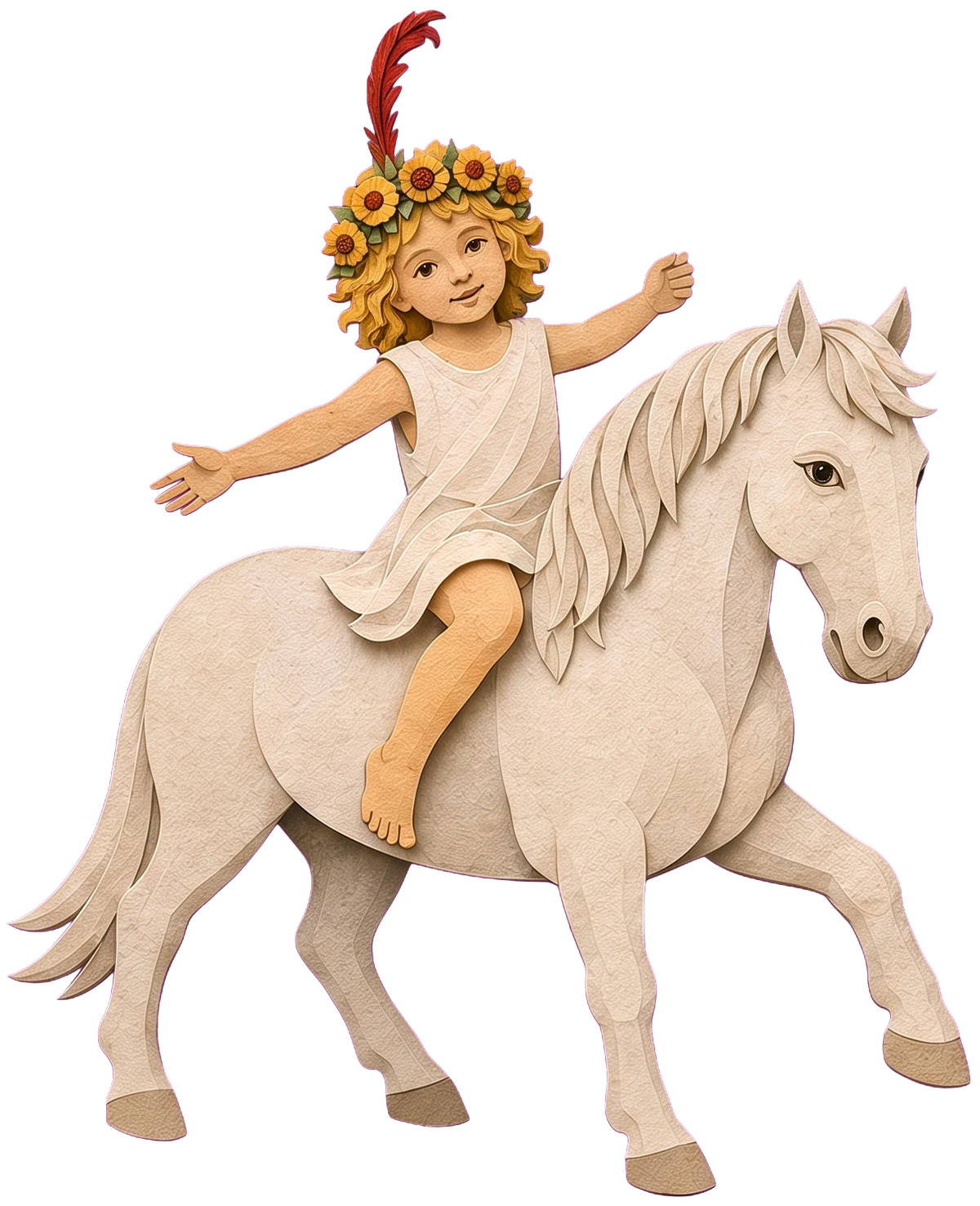
A smiling child in a crown of sunflowers and a red feather throws one arm wide. Waite says humanity becomes a little child here, simple, innocent, and wise in that innocence. His child is naked; ours wears a light white tunic.
"a child in the sense of simplicity and innocence in the sense of wisdom."Waite, 1911
Why it is hereThe child is the answer to the whole card: joy without effort. One arm flies wide, with no reins and a crown of sunflowers. The horse carries the child and the banner flies on its own. The flowers, the wall and the sun all frame this one small rider.
Piece fourThe red banner
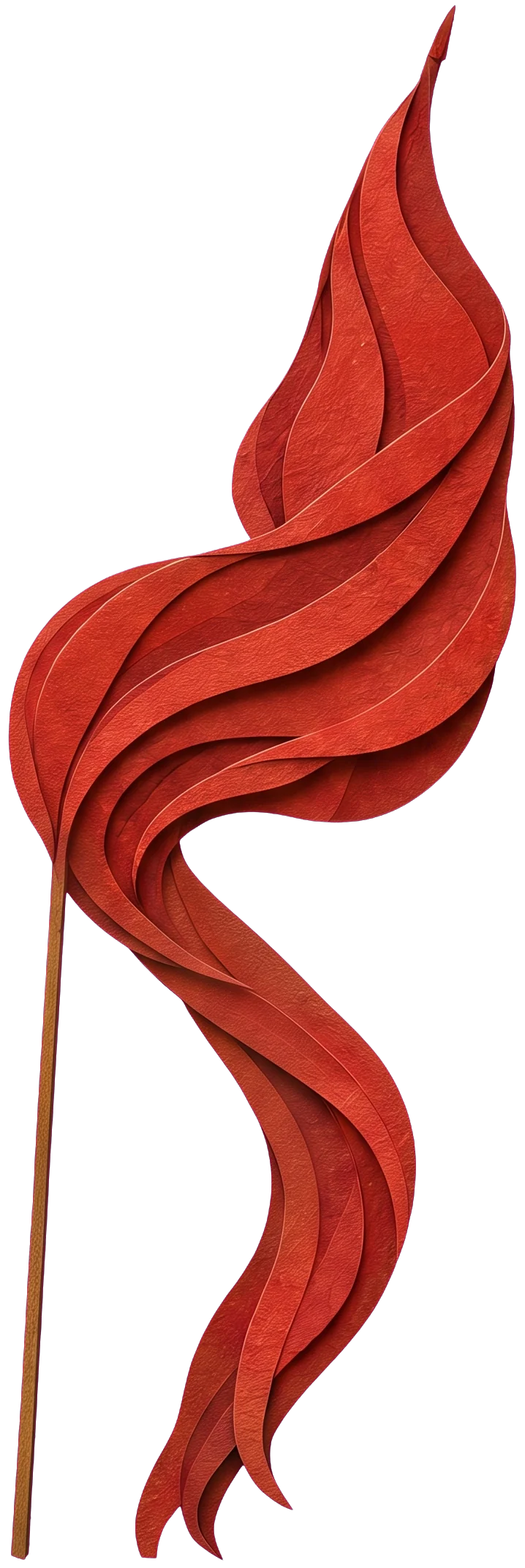
The child holds up a long red banner that pours out in waves. Waite calls the child on a white horse with a red standard the better symbol for this card. The banner carries life into the open.
Why it is hereThe banner makes the child's movement visible. It streams back in long waves, so the ride looks fast and free. Its red answers the gold of the sun and the feather in the child's hair. The child holds it up without effort, the way the sun shines.
Colour, and where else it appearsEchoes
-
The sun
Bright yellow on clear blue, with almost no shadow anywhere. The Fool walks under a sun tucked into the corner of his sky. In The Lovers a big sun rises behind the angel's head. On The Sun it fills the whole top of the card and looks down with a face.
Also in -
The sunflowers
Sun yellow petals, brown centres, grey stone. The Queen of Wands holds a single sunflower on her throne. The child here wears a crown of small ones. The Six of Cups has stone walls and flowers too, white blooms set in gold cups. On The Sun the flowers grow tall and free, above the wall.
Also in -
The child
Gold curls and a cream tunic: the sun's colours and the horse's. Children play in the Six of Cups, red hoods up, handing flowers across. In the Ten of Cups two children dance under a rainbow while their parents raise their arms. On The Sun a single child rides alone, arms wide.
Also in -
The red banner
Bright red and deep red folded together. Only the child's feather shares the colour. Death carries a black banner with a white rose, held by an armoured rider on a white horse. Judgement's banner is white with a red cross. The Sun's banner has no sign on it at all, only colour and movement.
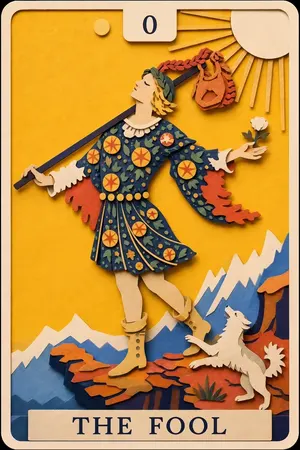
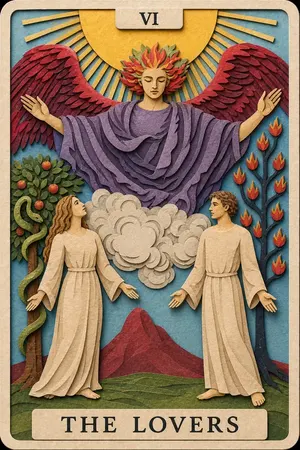
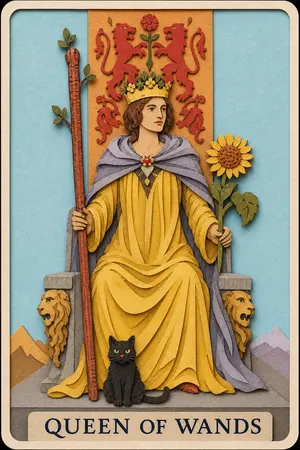
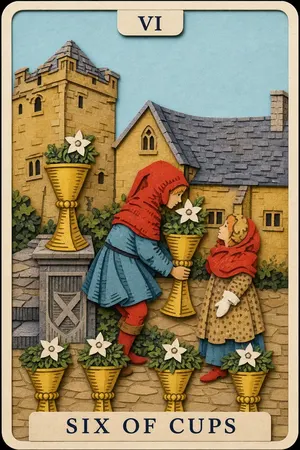
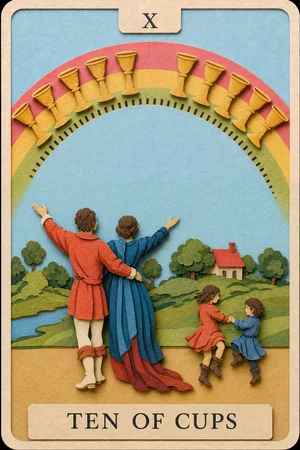
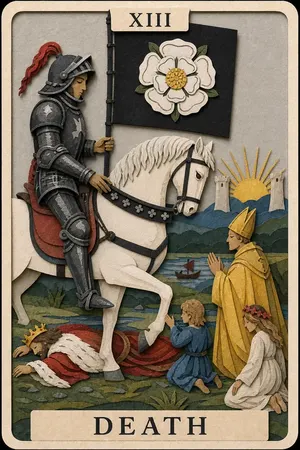
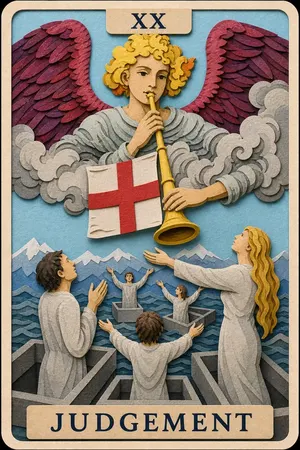
Colour notes are ours, read from the picture; Waite does not explain the colours.
The SunUpright
Happiness you can feel. Waite's words are simple: material happiness, fortunate marriage, contentment. Things go well, people are warm, you feel like yourself.
It's clear, too. After The Moon's doubt and fear, you see plainly what's in front of you. Enjoy it, share it, and let people see you.
The SunReversed
Waite says only: the same in a lesser sense. The joy is still there, smaller, cloudier, or slower to arrive.
A good thing is delayed, or you're struggling to enjoy what you have. The sun is still shining; something's standing in front of it for now.
Yes or noYes.
Yes, the clearest one in the deck. It can go well and make you happy.
The Sun in your lifeIn your life
Love
Warm, happy, open love. Waite names a fortunate marriage. Great for a relationship or a new meeting.
Work
Success and recognition. People see your work and things move fast.
Money
Money goes well: comfort, gains, less worry. Enjoy it, don't blow it.
Health
Energy and vitality. A card can't diagnose you; if something's wrong, see a doctor anyway.
Spirituality
Light and simple trust. Waite reads this sun as spirit awake in you: direct light, not reflected.
Advice
Step into the light. Be open and generous, and enjoy what's good.
As a person
Warm, cheerful, confident, honest as a child. The room lights up.
Past, present, future
Past: a happy time that still warms you. Present: joy and clarity. Future: success and good days.
Written by us, from Waite's meanings and the picture.
Symbols and correspondencesAt a glance
- Number
- XIX
- Hebrew letter
- Resh
- Astrology
- The Sun
- Element
- Fire
- Upright
- Material
- Reversed
- Lesser
QuestionsCommon questions
Yes, one of the best. Joy, success, warmth. Even reversed, Waite says it means the same in a lesser sense.
Happy, open love. Waite lists a fortunate marriage among its meanings.
Yes, the clearest in the deck.
Waite calls the child on a white horse with a red standard the better symbol for this card. The child is simplicity and innocence; the horse is your animal nature, led along in peace.
The Sun itself, in the Golden Dawn system. Its element is fire, its Hebrew letter Resh.
Waite says the card moves you from the light of this world, the sun you see, to the light of the world to come. That light goes ahead of you, and it has a child's heart.
The Pictorial Key to the Tarot, 1911Card meanings and quotes: A. E. Waite, The Pictorial Key to the Tarot, 1911. Hebrew letter, sign and element: the Golden Dawn's Book T. Colours, life situations, yes or no and questions: written by us, from Waite's meanings and the picture.
All 22 major cards