V, Suit of WandsFive of Wands tarot card meaning
Upright and reversedFive of Wands in shortIn short
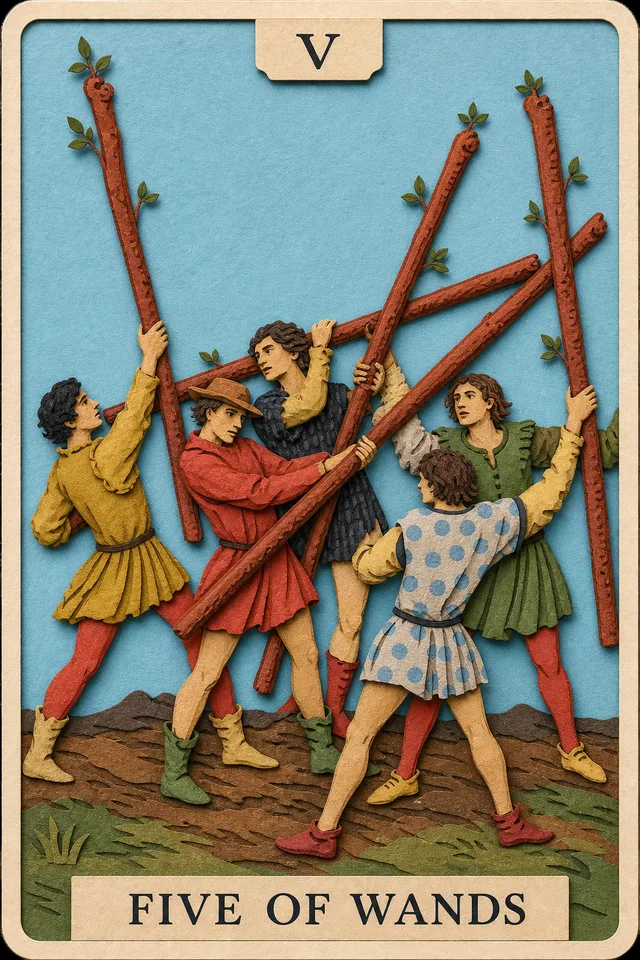
The Five of Wands is competition. Five young men swing staves at each other in a tangle, and no one gets hurt. Rivalry, practice and struggle, closer to a game than a war.
- Competition
- Strife
- Rivalry

Piece oneThe trampled ground
Their feet stand wide on churned brown earth. Waite connects the card with the battle of life. Ordinary ground, where people compete every day.
"In this sense it connects with the battle of life."Waite, 1911
Why it is hereThe ground keeps the fight ordinary. No castle and no prize in sight, only churned earth under ten busy feet. That's why Waite ties the card to the battle of life: a struggle that happens anywhere, any day. The tangled staves above need something under them, and this field is it.
Piece twoThe faces
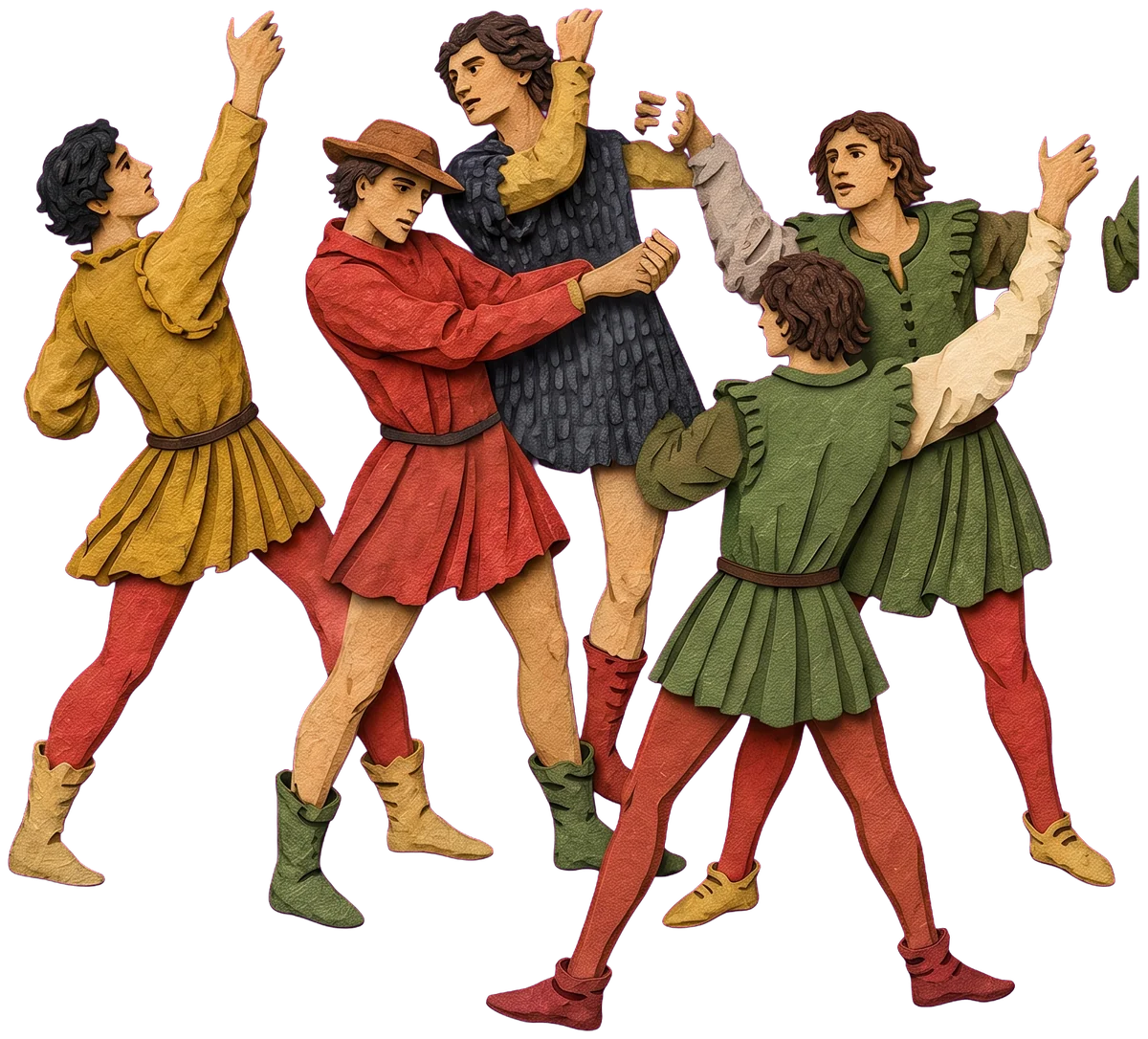
Look at the faces: focused, a little surprised, no one in pain. Waite calls it mimic warfare, a sham fight. A rehearsal for the real thing.
"It is mimic warfare..."Waite, 1911
Why it is hereThe faces tell you how serious it is. Nobody bleeds and nobody falls; they look focused, even a little surprised. That's what makes Waite's mimic warfare fit. Five young men practise against each other, and the staves crossing above their heads look wilder than the mood below.
Piece threeThe tangled staves
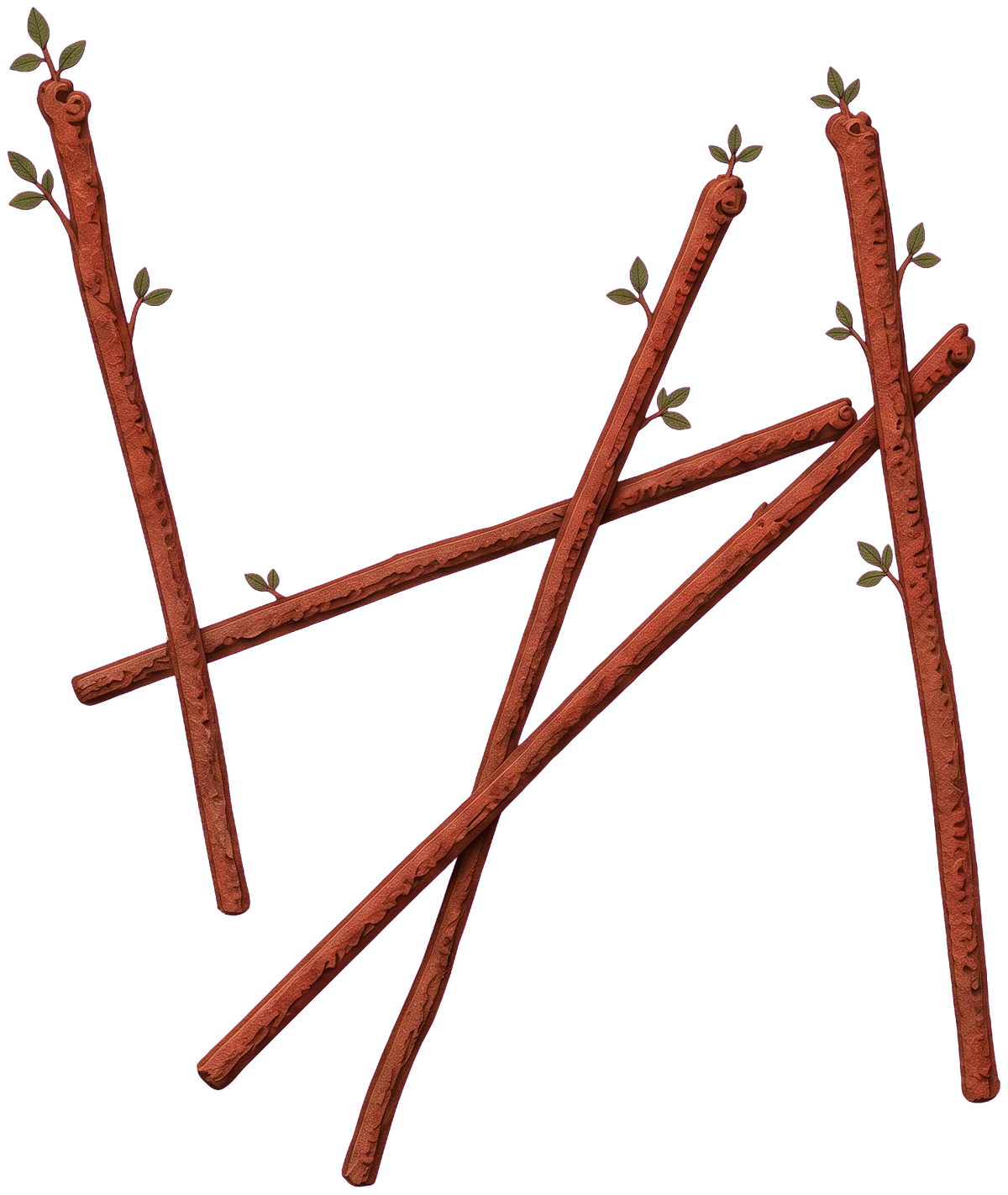
Five staves cross in the air, each at its own angle. Waite says the youths brandish them as if in sport or strife. Everyone's busy, and nothing gets built.
"A posse of youths, who are brandishing staves, as if in sport or strife."Waite, 1911
Why it is hereThe staves draw the card's real subject: effort that cancels itself out. Each one points its own way, and none of them builds anything. Above the trampled ground and the busy faces they make a lattice of crossings. Lined up, they'd make a fence; tangled, they make a game.
Piece fourThe spotted tunic
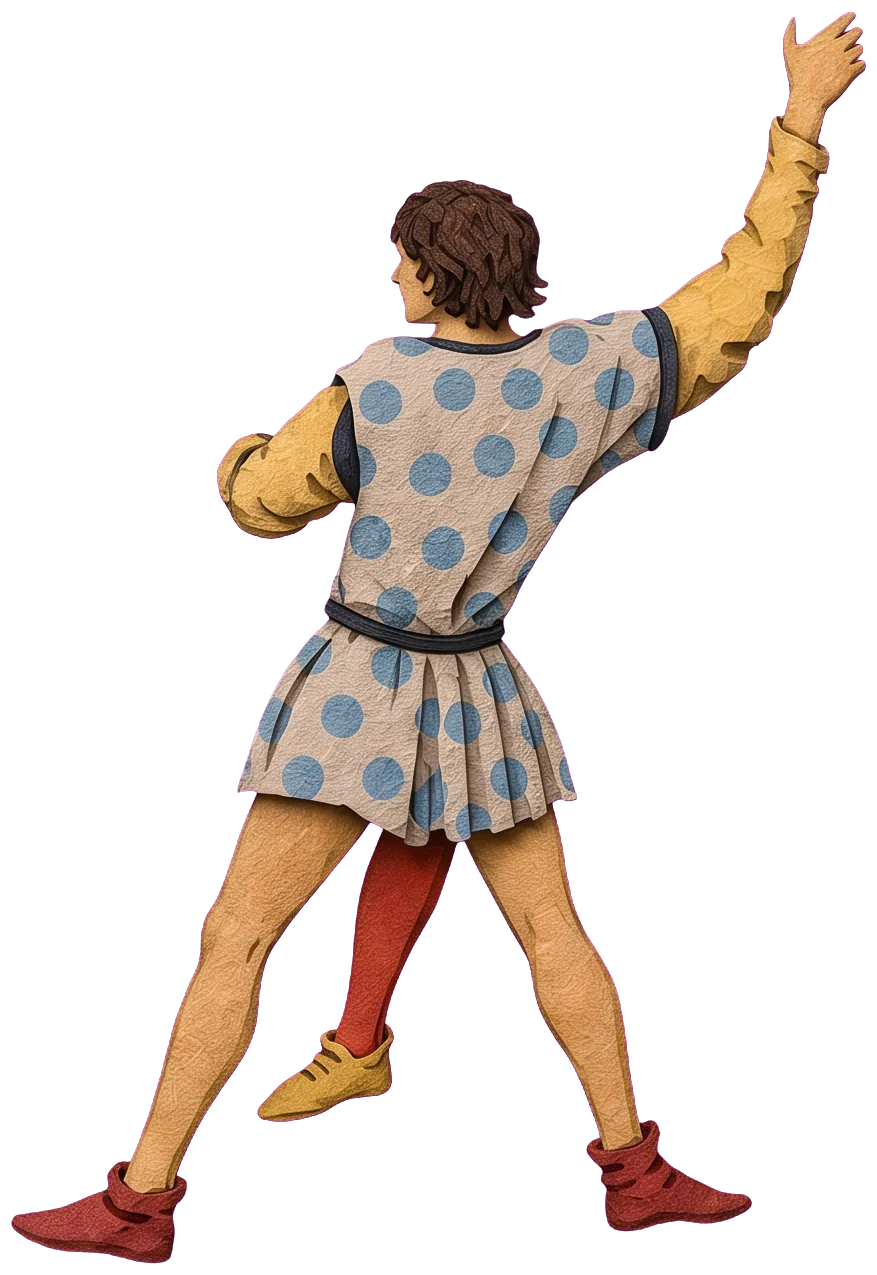
One youth turns his back to you, arms raised, tunic covered in blue spots. Waite reads the fight as the hard competition of the search for riches and fortune. Each one wants something, and each blocks the others.
"...the strenuous competition and struggle of the search after riches and fortune."Waite, 1911
Why it is hereThe spotted youth puts you in the scrum. He turns his back, arms up, so you stand behind him as if you were next in line. His playful pattern keeps the fight light. He reaches for the same tangle of staves as the others, and blocks them while he does.
Colour, and where else it appearsEchoes
-
The trampled ground
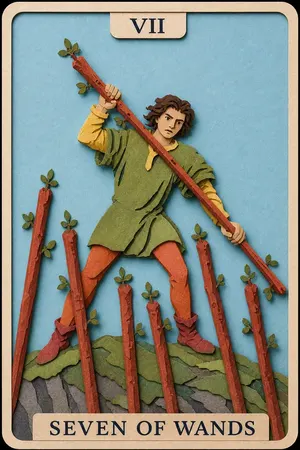
Brown earth and olive grass: everyday ground for an everyday fight. Scuffed patches show where feet dig in and shove. The Seven of Wands puts its fighter on rough, mossy rock above his attackers. Here nobody holds the high ground, so the five push and grapple on level earth.
Also in -
The faces
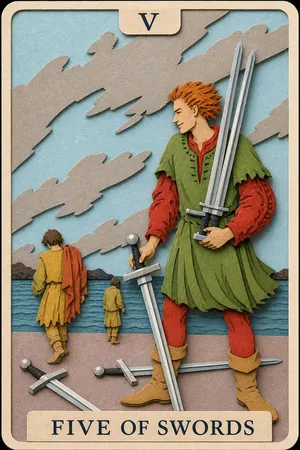
Mustard, brick red, dark blue, green: each youth wears his own colour, a team of one. The Five of Swords shows a later moment in a contest: a young man gathers up the swords while two others walk away beaten. In the Wands no one has won yet, so every face is still in the game.
Also in -
The tangled staves
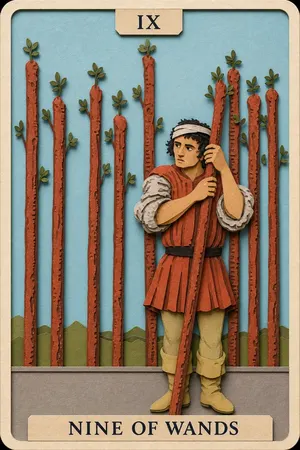
Red-brown staves on pale blue sky, every line cutting across another. The Seven of Wands takes the same wood and gives it a direction: six staves rise from below toward one man. In the Nine of Wands the staves stand in a straight row like a fence. The Five is the mess before any order.
Also in -
The spotted tunic
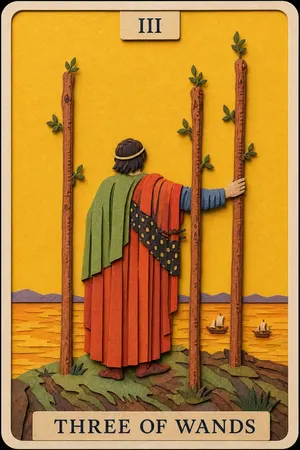
Cream cloth with sky blue spots, a playful pattern in the middle of a fight. The spots pick up the blue of the sky above the staves. The Three of Wands also shows a man from behind, a dotted panel on his robe, calm and alone above the sea. This back belongs to a body in motion, arms raised mid-swing.
Also in
Colour notes are ours, read from the picture; Waite does not explain the colours.
Five of WandsUpright
Competition and struggle. Waite's first word is imitation, as in a sham fight, then he adds the strenuous competition and struggle of the search after riches and fortune: the battle of life.
Rivalry at work, arguments that go in circles, a crowded field where everyone wants the same thing. Waite notes that some attributions call it a card of gold, gain and opulence. The struggle can pay.
Five of WandsReversed
Waite's words: litigation, disputes, trickery, contradiction.
The game turns serious. A dispute may reach lawyers, or someone stops playing fair. Keep records and stay honest.
Yes or noNot yet.
Not yet. The struggle is still on. Expect competition and effort first.
Five of Wands in your lifeIn your life
Love
Friction, bickering, or rivals for someone's attention. Mostly noise.
Work
Competition, clashing ideas, everyone talking at once. Let it sharpen your work.
Money
A struggle for gain. Some read the card as gold and opulence; you'll compete for it.
Health
Stress from conflict, or the energy of sport. A card can't diagnose you; if something's wrong, see a doctor.
Spirituality
Many voices, many opinions. Listen, then pick the practice that's yours.
Advice
Treat the fight as practice. Compete fairly and let small clashes go.
As a person
Competitive, lively, argumentative. Loves a challenge and a good debate.
Past, present, future
Past: rivalry or disagreement. Present: competition and noise. Future: a test that makes you stronger.
Written by us, from Waite's meanings and the picture.
Symbols and correspondencesAt a glance
- Suit
- Wands
- Element
- Fire
- Astrology
- Saturn in Leo
- Sephira
- Geburah
- Upright
- Imitation
- Reversed
- Litigation
QuestionsCommon questions
Mixed. Conflict and struggle, but Waite calls it a mimic fight, and some attributions he mentions read it as gold and gain. Real struggle, rarely dangerous.
Friction and small arguments, or rivals for someone's attention. Talk it out before it becomes a habit.
Not yet. There's still a fight to get through.
Waite calls it mimic warfare, a sham fight, staves brandished as if in sport or strife. It stands for competition and the battle of life.
Saturn in Leo, the first decan of Leo, in the Golden Dawn system. Fire is its element, Geburah its sephira.
Waite calls it mimic warfare, a sham fight, and ties it to the hard struggle for riches and fortune: the battle of life.
The Pictorial Key to the Tarot, 1911Card meanings and quotes: A. E. Waite, The Pictorial Key to the Tarot, 1911. Element, decan and sephira: the Golden Dawn's Book T. Colours, life situations, yes or no and questions: written by us, from Waite's meanings and the picture.
All 14 Wands